




みんなの評価
まだ採点がありません
2020年4月16日PS4・Switchアドベンチャーオレンジ / アークシステムワークス
探偵 神宮寺三郎 プリズム・オブ・アイズ 死者に捧げる石
みんなの評価
まだ採点がありません
概要
Video game seriesJake Hunter, known in Japan asTantei Jingūji Saburō(探偵神宮寺三郎; "Detective Saburō Jingūji"), is a mysteryadventure gameseries originally developed and published byData Eastin 1987. The property would transfer toWorkJamafter its seventh instalment, and later toArc System Works.The first associated game to receive an English language release wasTantei Jingūji Saburō DS: Inishie no Kioku, retitled and released inNorth Americaon June 11, 2008, byAksys Gamesin truncated form asJake Hunter: Detective Chronicles. The game was re-released on May 26, 2009, asJake Hunter Detective Story: Memories of the Past, containing the originally localised three cases with new translations, plus three further cases, and a large number of unlockables including comics. No further releases would be announced until July 1, 2017, when Aksys Games revealed they would be bringing overTantei Jingūji Saburō: Ghost of the Duskin 2018.A prequel game, given the brandingAlternate Jake Hunterinternationally, was localised internally and released in 2019 with original character names and settings preserved.History[edit]According toEnterbrain'sFamitsu, theTantei Jingūji Saburōfranchise had sold over 2,220,000 units at the time of its twentieth anniversary,making it one of the longest running and best-selling Japanese adventure game series in history.There are nineteen main series entries, complemented by a 25-game mobile sub-series and various examples of tie-in media. A recurrent series tradition takes titles from popular music as names for instalments, with frequent reference made to works ofKenji Sawada.Family Computer[edit]The first game of the series,Shinjuku Chūō Kōen Satsujin Jiken(新宿中央公園殺人事件; Shinjuku Central Park Murder Case), was released in 1987 byData Eastfor theFamily Computer Disk System. Following in the style ofYuji Horii's popular Famicom-ported adventure games, the "command selection" style games featured advanced graphics, sound effects, and distincthardboiledscenarios to set themselves apart from contemporaries. The series employed a number of advanced game mechanics, developing techniques which would later find popularity in the industry at large. Time played an important role in the first game, with each command selected by the player causing a certain amount of in-game time to elapse; failure to solve the mystery during the allotted time period resulting in a bad ending. This time system would later be revived in the series' 7th installment. The scenario for the series' 3rd and 4th installments was written by a fledglingKazushige Nojima, who added segments following the secondary lead which alternated on a predetermined basis.Fifth generation consoles[edit]Production was halted after the 4th installment, but would be revived internally when Data East took on series fan Tatsuya Saito. Saito would become scenario writer for the 5th game in the series, directed by Eiichi Nishiyama, imminent heir to the role of series producer, and released on thePlayStationandSega Saturnin 1996. This fifth entry would see several developments on the original games made possible by the use of the CD-ROM: an update to the series' graphics and sound, including an opening movie featuring an animated prelude andvoice actingfor the first time; a "zapping" system which allowed different branches of the story to be played by way of alternating characters; 3D-rendered mini games; and the inaugural installment of a sub-series known in Japan as theMystery Casebookgames (Jake Hunter Unleashedin English releases), featuring super-deformed caricatures of the main trio encountering small-scale mysteries demanding careful logic-puzzle gameplay, which would be included alongside mainline games.Most of these features would become recurrent in the series, with the 6th installment, written by Hirotaka Inaba, replacing the previous game's stylised character design with a painted realist style rendered by original character designerKatsuya Terada, and adding a new "password" mechanic, involving hidden codes in the main game which could be used to unlock bonus content. Bearing the newly christened series subtitle "Detective Adventure Game", both this game and the next, released exclusively for PlayStation, would feature opening movies directed byShimako Satō.Sixth generation consoles[edit]In 1999, a financially troubled Data East licensed out the series toWorkJam, to which Nishiyama's "Team Jingūji" would transfer when Data East went bankrupt in 2003. The transition between studios marked a shift in game design, story paths becoming once more linear and perspective shifts scripted, setting the formula for later games in the series. With WorkJam founder Yutaka Kaminaga finding previous scenario writers unavailable, writing credit for the series' eighth installment, released forPlayStation 2in 2002, fell to Mitsue Kaneko. The resultant game featured a number of peripheral references to the contemporaryGrasshopper ManufacturedebutThe Silver Case.The series continued at WorkJam with a further game for the PS2 and reimaginings of the Famicom games released as the inauguration of a line of mobile phone applications. The final game of the generation, co-developed byMarvelous Interactivefor theGame Boy Advance, marked the series debut on handheld platforms.Seventh generation consoles[edit]Beginning with a special 20th anniversary release for theNintendo DS, WorkJam would work withArc System Worksin development of console games, now released exclusively on handheld platforms, predominantly in the form of theTantei Jingūji SaburōDetectiveStorycompilation line, with the addition of aPlayStation Portablerelease similar in form to earlier PlayStation installments. WorkJam licensed a series of PlayStation Game Archives releases of the original Data East games to Expris, and continued their mobile game line, featuring contributions from writers such as then-FlagshipaffiliateKazutaka Kodaka, to a total of twenty-four releases before it was retired.Eighth-generation consoles[edit]In 2011,WorkJam began to wind down production, with full responsibilities for the ongoing development of a special 25th-anniversary game for theNintendo 3DSfalling to Arc System Works. Several WorkJam staff, including Nishiyama and Kaneko, would form a new studio,Orange, while rights to various company properties including theTantei Jingūji Saburōseries passed to Expris. For the next five years the series would remain largely dormant, aside from Game Archives rereleases of WorkJam's two PS2 games from Expris, and a cameo by the title character inInuwashi Urabure Tantei to Ojou-sama Keiji no Ikebukuro Jiken Fairu, a mobile game developed by Orange and scored by longtime series composer Seiichi Hamada.In 2017, Arc System Works announced that plans for a 30th-anniversary revival had led to its obtaining of exclusive rights to Expris' WorkJam-inherited properties at the end of the previous year. Following this, the company worked with Orange andNeiloto publish several titles for handheld and home consoles, while exploring new avenues for PC delivery and reviving the mobile line for smart devices.Characters[edit]The main character of the series is Jake Hunter (known in Japan as Saburō Jingūji(神宮寺三郎,Jingūji Saburō)), a thirty-something (29 for the first five installments)private investigatorwho operates a detective agency in the Tripudio district of the fictional American city of Aspicio (Kabukichō,Shinjukuin the Japanese original). He was born the third son of a wealthy business enterprise owner, but chose to travel toNew York Cityduring his youth to work as an assistant detective. He is a heavy smoker, and often assembles his thoughts with the help of aMarlborocigarette. According to his in-game profile, his favorite alcoholic beverage iscognac, and he drives a greenMini Cooper.Hunter is persistently accompanied in his investigations by Yulia Marks (known in Japan as Yōko Misono(御苑洋子,Misono Yōko)), hispolyglotassistant, and often collaborates with his old friend Scott "King" Kingsley (known in Japan as Sanzō "Kuma-san" Kumano(熊野参造,Kumano Sanzō)), a middle-aged inspector with the city police.Voice acting[edit]Voice acting was first used in certain game scenes in the 5th installment, and has been implemented in most subsequent releases, excluding those released for mobile, GBA and DS. Jingūji has been voiced byYukimasa Kishino,Akio Ōtsuka,Jūrōta Kosugi, and Kaoru Katō; Yōko by Tsumugi Ōsawa, Yōko Saitō,Fumiko Orikasa, Kazue Nakamoto,Seiko Yoshida, andMamiko Noto; and Sanzō byFumihiko Tachiki,Kōji Ishii,Masaaki Tsukada, and Naomi Otome.List of media[edit]Mobile series[edit]The mobile games began development under WorkJam for flip phones in 2003. The first four games were remakes of the original Famicom games, featuring (often significant) reworking of their stories. Following Arc System Works' acquisition of the series in 2017, the original games were collected in a smartphone app, and the line relaunched with a new series beginning in 2019.Other media[edit]The series has been accompanied by a plethora of tie-in books, the first of which, a choose-your-own-adventure stylegamebookfor young adults, was released in 1988. After the series revival at Data East, Tatsuya Saito would pen a prequel novel documenting the first meeting between Jingūji and Kumano. A further novel would be published in 2000, followed by a novelisation of the eighth game. Another prequel, telling a story set during Jingūji's schooldays, was published byDengeki Bunkoin 2004, followed by a brief sequence of releases at Sesame Books, ending in 2007.Mangaadaptations of the third and sixth games were previously made available online, and several game guides were published prior to the series' shift toward handheld platforms.Several soundtrack CDs have also been released, featuring a range of music from across the series composed by series stalwart Seiichi Hamada and others. A Drama CD featuring three short vignettes was included with early copies of the sixth game.The first four games in the series were released on theWii'sVirtual Consolein Japan.
基本情報
- 発売日
- 2020年4月16日
- 機種
- PS4・Switch
- ジャンル
- アドベンチャー
- 開発
- オレンジ
- 販売
- アークシステムワークス
関連するゲーム

探偵 神宮寺三郎 プリズム・オブ・アイズ 虚飾の夜
2020年
- 探偵 神宮寺三郎 プリズム・オブ・アイズ 果断の一手
探偵 神宮寺三郎 プリズム・オブ・アイズ 果断の一手
2020年
- 探偵 神宮寺三郎 プリズム・オブ・アイズ 椿のゆくえ
探偵 神宮寺三郎 プリズム・オブ・アイズ 椿のゆくえ
2020年
- 探偵 神宮寺三郎 プリズム・オブ・アイズ ふた色の少女
探偵 神宮寺三郎 プリズム・オブ・アイズ ふた色の少女
2020年

探偵 神宮寺三郎 プリズム・オブ・アイズ 魔鏡の真実
2020年

ダイダロス:ジ・アウェイクニング・オブ・ゴールデンジャズ
2018年

探偵 神宮寺三郎 プリズム・オブ・アイズ
2018年

探偵 神宮寺三郎 GHOST OF THE DUSK
2017年

探偵 神宮寺三郎 復讐の輪舞
2012年

探偵神宮寺三郎 DS 赤い蝶
2010年

探偵 神宮寺三郎 亡き子の肖像
2010年
- 探偵 神宮寺三郎 亡き子の肖像 & 謎の事件簿
探偵 神宮寺三郎 亡き子の肖像 & 謎の事件簿
2010年
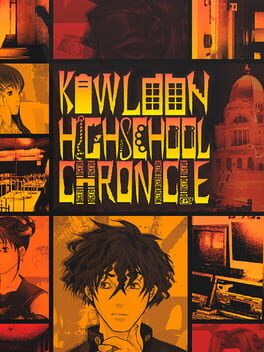
九龍妖魔學園紀 Origin of Adventure
2020年

デイヴ・ザ・ダイバー Anniversary Edition
2024年

BLAZBLUE CROSS TAG BATTLE
2018年
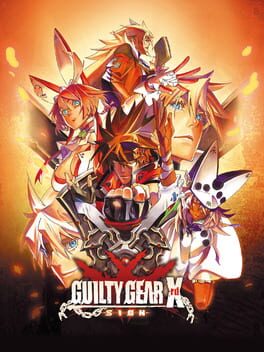
GUILTY GEAR Xrd -SIGN-
2014年

Melty Blood Actress Again Current Code
2010年

The Missing J.J.マクフィールドと追憶島
2018年
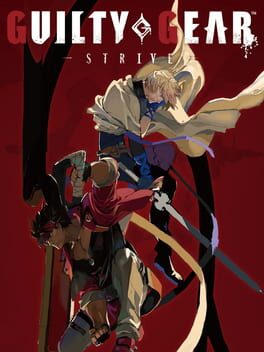
GUILTY GEAR -STRIVE
2021年

くにおくんの三国志だよ全員集合!
2022年

キルラキル ザ・ゲーム 異布
2019年

サバクのネズミ団!改。
2017年

熱血硬派くにおくん

GUILTY GEAR XX ACCENT CORE PLUS R
2012年

Jack Orlando: Director's Cut
2013年

Red Johnson's Chronicles: One Against All
2012年

A Case of Distrust
2018年

Blade Runner: Enhanced Edition
2022年

ファミコン探偵倶楽部 消えた後継者・うしろに立つ少女
2021年

Tex Murphy: Martian Memorandum

Kansei ~豪邸殺人事件~
2022年

Tex Murphy: Under a Killing Moon
1994年
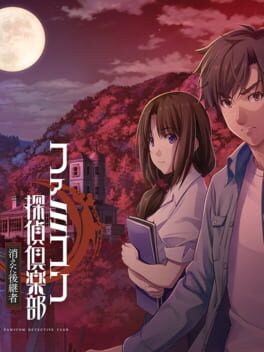
ファミコン探偵倶楽部 消えた後継者
2021年

Tails Noir
2021年
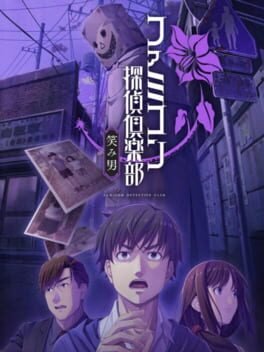
ファミコン探偵倶楽部 笑み男
2024年

Sinking Island
2007年
買うならどこ
| ストア | 機種 | 価格 | リンク |
|---|---|---|---|
| PlayStation Store | PlayStation 4・通常版・新品 | ¥600 | ストアで見る |
| Nintendo Store | Nintendo Switch・通常版・新品 | ¥600 | ストアで見る |